- Call Us: 011 4652 8024
- Email: info@pushpanjalihospitals.com


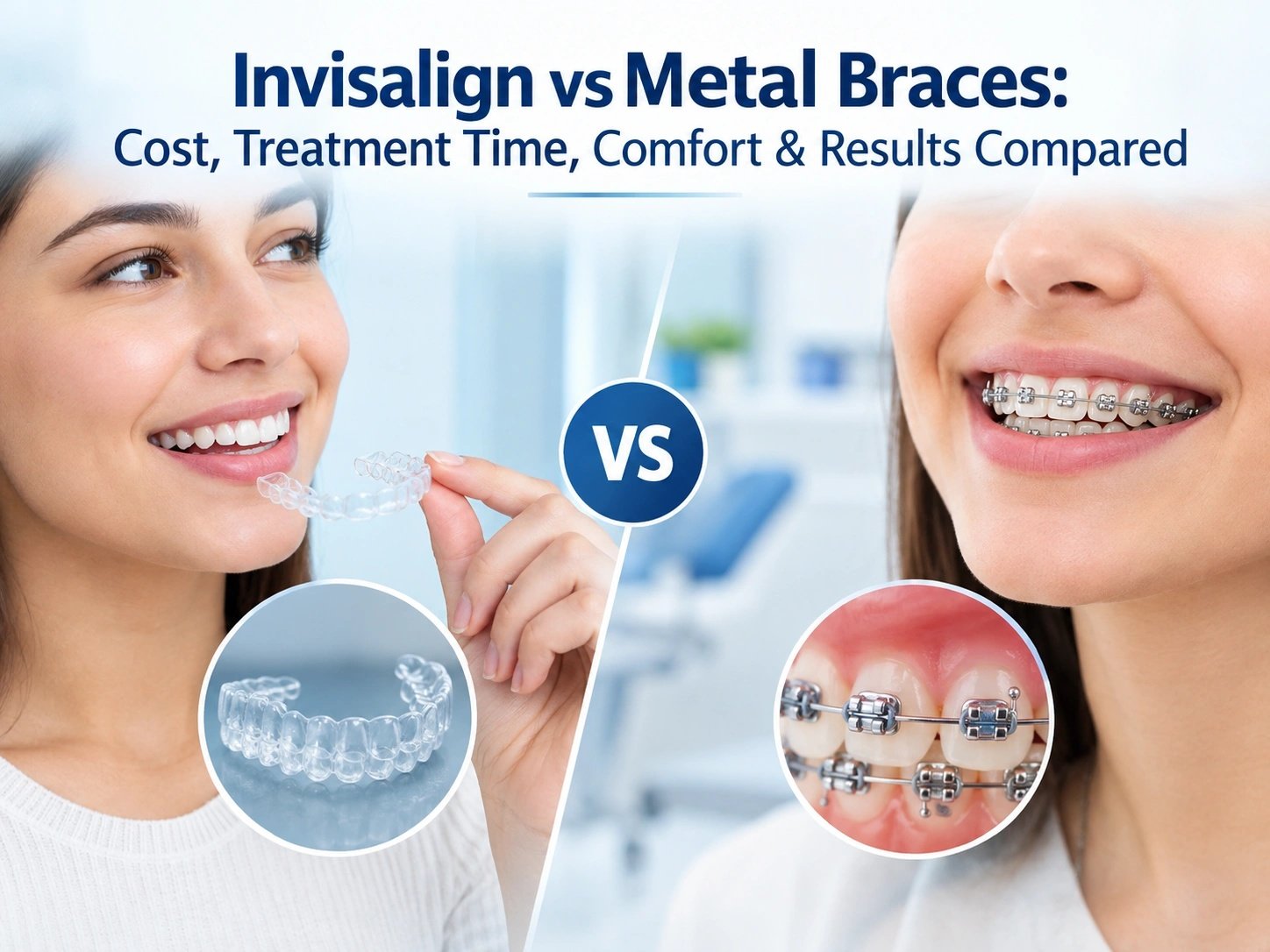
Choosing between Invisalign and metal braces can feel like choosing between two very different journeys to the same destination. Both aim to improve teeth alignment, but they differ in appearance, daily maintenance, wearing experience, and treatment planning. If you are searching for the best dental hospital in West Delhi, it is important to look beyond advertisements and compare the treatment options with an orthodontist.
Invisalign uses a series of transparent, removable trays that gradually guide tooth movement. Your orthodontist plans the sequence according to the desired tooth positions. Patients generally need to wear the aligners for around 20–22 hours each day and remove them for eating, drinking and oral hygiene.
Metal braces use fixed appliances. Brackets attach to the teeth, while archwires apply controlled forces that gradually move teeth. Because braces remain attached throughout treatment, they do not depend on the patient remembering to put them back after meals.
Both approaches belong to modern orthodontics, but they suit different patients. Clear aligner therapy can offer an attractive option for suitable cases, while traditional orthodontic appliances can manage a broad range of tooth and bite problems. The American Association of Orthodontists notes that clear aligners do not successfully treat every orthodontic problem.
Cost is one of the biggest questions patients ask, but there is no single standard price that applies to everyone.
The final fee can depend on:
The complexity of your dental correction
Treatment duration
The number of aligners or type of braces required
The orthodontist or dental clinic
Follow-up appointments
Additional procedures, if required
Retainers after active treatment
Invisalign states that its treatment cost is generally comparable to braces, while the final price depends on case complexity and the number of aligners required.
Instead of focusing only on upfront expenses, consider long-term value. A professional orthodontic consultation can explain the expected treatment cost, duration and retention requirements before you commit.
Also Read This Blog: Modern Orthopedic Treatment for Improved Movement and Recovery
There is no universal winner in treatment duration.
The American Association of Orthodontists reports that most braces treatment lasts around 12–24 months, although individual cases can take less or more time
Invisalign treatment can also vary considerably. The manufacturer notes that some patients may see treatment progress within a few months, but only a dental professional can estimate an individual treatment timeline.
Your crowded teeth, spacing issues, overbite, underbite, jaw alignment and overall treatment goals can all influence the timeline. Treatment compliance also matters. Wearing aligners inconsistently can interfere with the planned tooth movement.
So, if someone promises that one option will always finish faster, treat that claim with a healthy dose of scepticism. Teeth, unfortunately, do not read marketing brochures.
Comfort varies from person to person.
Invisalign aligners have smooth surfaces and do not use metal brackets or archwires. However, you may experience pressure or mild discomfort when you begin wearing a new set because the trays are designed to move your teeth. The American Association of Orthodontists also notes that mild discomfort can occur during the adjustment period.
Metal braces can cause temporary soreness after placement or adjustment. Brackets and wires may also irritate the cheeks or lips during the adjustment period.
For patients who prioritise dental aesthetics, invisible orthodontics can make Invisalign appealing. Patients who prefer a fixed solution may feel more comfortable with braces because they do not need to remember to wear them.
This is one area where the daily experience differs noticeably.
With Invisalign, you can remove the trays before meals and brush normally before putting them back. That can make oral hygiene simpler.
Braces require more attention because food can collect around brackets and wires. This does not mean aligners let you become careless. You still need good oral hygiene, regular dental check-ups and proper cleaning of your trays.
Patients who need urgent dental attention should also know where their local 24-hour emergency clinic is, particularly when an orthodontic problem occurs alongside significant pain, injury or another dental emergency.
The better question is not “Which one gives better results?” but “Which option can predictably address my specific problem?”
Metal braces can treat many orthodontic problems, including significant tooth crowding and complex bite issues. Clear aligners can treat many cases too, but their suitability depends on the individual diagnosis and treatment plan.
Both methods use controlled tooth movement to improve teeth straightening. Treatment may also address bite correction and functional concerns rather than focusing only on smile enhancement.
Consider Invisalign if you value:
A discreet appearance
Removable trays
Easier access for brushing and flossing
Fewer dietary limitations
The responsibility of following a strict wearing schedule
Metal braces may suit you if you need:
A fixed orthodontic appliance
Treatment for more complex alignment problems
A solution that does not depend on daily removable-appliance compliance
A conventional approach supported by extensive clinical use
The best decision should follow a proper examination, diagnosis and digital dental scan where appropriate. Pushpanjali Hospital provides dental and orthodontic care and states that its dental department offers braces and Invisalign clear aligners alongside other dental services.
Finishing orthodontic treatment does not mean your teeth will automatically stay in their new positions.
Post-treatment retention plays an important role in maintaining results. Retainers may be removable or fixed, and your orthodontist will recommend the appropriate approach for your case.
Your long-term result depends on more than the appliance you choose. Treatment compliance, follow-up appointments, oral hygiene and post-treatment retention all matter.
There is no one-size-fits-all answer in the Invisalign vs Metal Braces debate. Invisalign may appeal to patients who value discretion and removability, while metal braces can offer a dependable fixed approach for a wide range of orthodontic problems.
If you are comparing treatment options, a professional assessment is more useful than choosing based on price or appearance alone. Pushpanjali Hospital offers dental and orthodontic services in West Delhi, including braces and Invisalign clear aligners.
Visit our Google Business Profile, explore the available dental services, and contact us to arrange an orthodontic consultation. A proper examination can help you understand your treatment options, expected treatment duration, costs and the best route toward healthier teeth alignment.