- Call Us: 011 4652 8024
- Email: info@pushpanjalihospitals.com


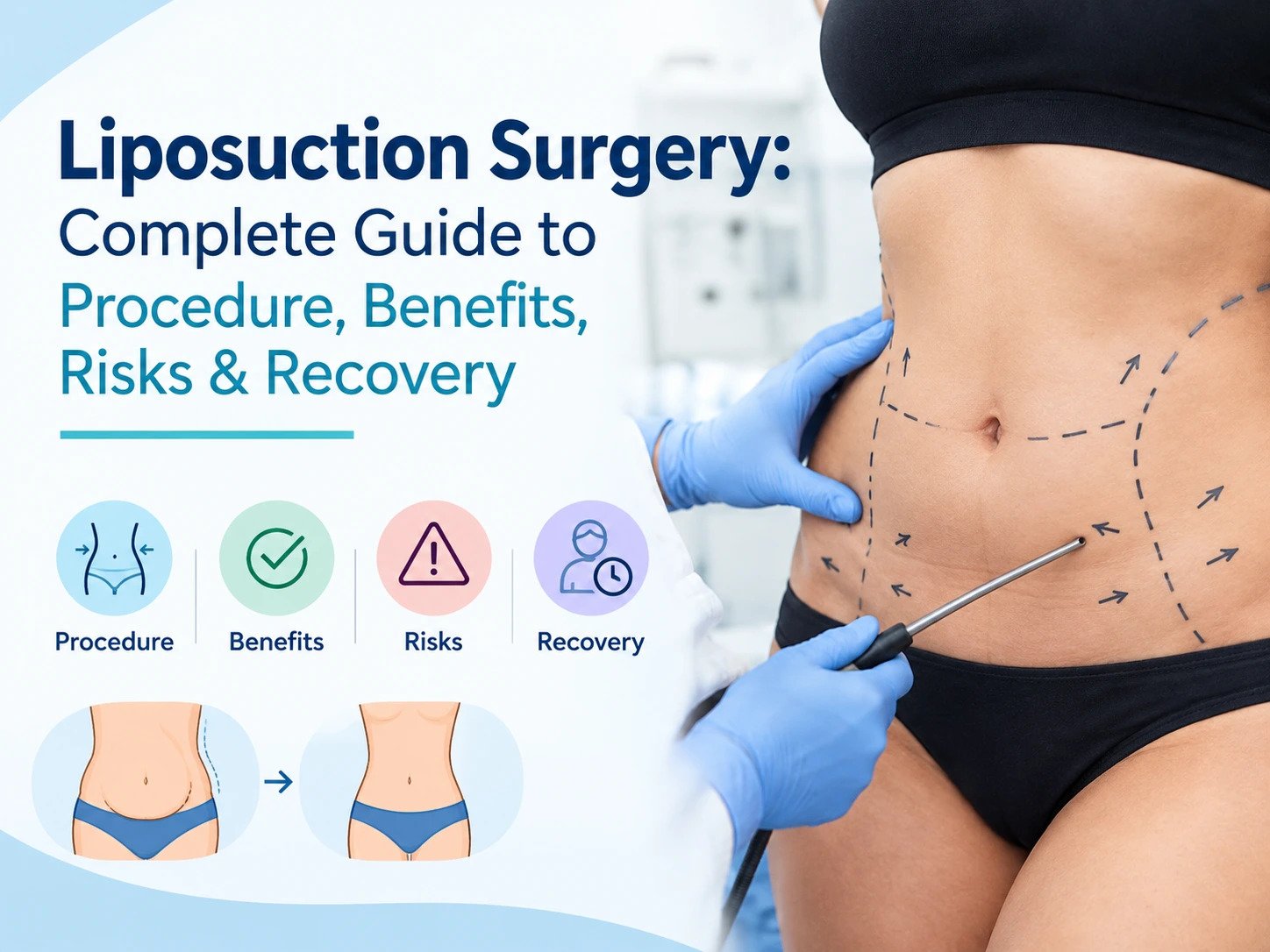
Liposuction surgery is a popular cosmetic procedure for removing stubborn, localized fat deposits that do not respond well to diet and exercise. If you are researching a best plastic surgery hospital in Delhi, the most important step is not choosing a catchy treatment package but finding qualified plastic surgery care, proper surgical facilities, and realistic guidance.
But let’s clear up one common misunderstanding before we go any further: liposuction is not a shortcut to weight loss. It is a body contouring procedure designed to reshape selected areas by removing excess fat. The goal is better proportion and contour - not replacing healthy eating, exercise, or a sustainable lifestyle.
Liposuction, also called lipoplasty or suction-assisted lipectomy, is a surgical procedure that removes fat cells from specific treatment areas using a thin tube called a cannula connected to a suction device. Depending on the treatment plan, the procedure may use local or general anesthesia.
The procedure can address localized fat deposits around the abdomen, waist, hips, thighs, arms, back, chin, and buttocks, among other areas. The exact treatment area depends on the patient's anatomy, goals, skin quality, medical history, and the surgeon's assessment.
In simple terms, liposuction focuses on shape rather than the number on your weighing scale. Your jeans may notice the difference before your bathroom scale does.
Good liposuction candidates generally have localized excess fat, relatively good skin elasticity, and realistic expectations.
Liposuction is not intended to treat obesity. It also does not reliably remove cellulite or correct significant loose skin. If excess skin is the main concern, another procedure may be more appropriate.
A proper liposuction consultation, therefore, matters. Your surgeon should review your medical history, medications, previous surgeries, lifestyle factors, treatment goals, and potential surgical risks before recommending a procedure.
The exact liposuction procedure varies according to the area being treated and the surgeon's technique.
Generally, the surgeon marks the treatment area, administers appropriate anesthesia, makes small incisions, and inserts a cannula to loosen and remove unwanted fat. The procedure may involve fluid infiltration before suction, depending on the technique used.
Several liposuction techniques exist. Traditional suction-assisted liposuction remains widely used, while assisted approaches include Tumescent Liposuction, Laser-Assisted Liposuction, Ultrasound-Assisted Liposuction, and Power-Assisted Liposuction.
The U.S. Food and Drug Administration (FDA) also classifies suction lipoplasty systems as medical devices used for aesthetic body contouring, highlighting that the equipment used in these procedures falls within a regulated medical-device framework.
The primary liposuction benefits relate to body shape and proportion. By reducing selected fat deposits, the procedure can improve the contour of areas that remain resistant to lifestyle changes.
Potential benefits include:
Reduction of localized fat deposits.
Improved body proportions and contours.
More defined appearance in selected treatment areas.
Long-lasting fat reduction when a stable, healthy weight is maintained.
Greater satisfaction with the appearance of specific body areas.
However, individual liposuction results vary. Maintaining a stable weight remains important because substantial weight gain can affect the overall contour after surgery.
Also Read This Blog: How to Choose the Best Thyroid Surgery Hospital for Safe & Advanced Care
Liposuction before and after photographs can help patients understand the type of change a surgeon commonly aims to achieve. However, photographs should never be treated as a promise of your own result.
Your outcome depends on factors such as skin elasticity, the amount and location of fat, anatomy, healing, lifestyle, and the surgical approach. Good communication during the consultation helps establish realistic expectations rather than chasing an edited or unrealistic image.
The liposuction cost cannot responsibly be reduced to one universal figure. The final expense can vary according to the treatment area, number of areas treated, surgical technique, anesthesia, facility charges, investigations, medications, compression garments, and postoperative care.
A trustworthy consultation should explain what is included in the quoted cost rather than presenting a surprisingly low headline number and leaving important charges hidden in the fine print.
If you are comparing the best hospital in Delhi, focus on the surgeon's qualifications, facility standards, anesthesia support, emergency preparedness, and follow-up care - not just the advertised price.
Liposuction recovery is a gradual process. Pain or discomfort, swelling, and bruising are common during the early recovery period. Your surgeon may recommend a compression garment to support healing and help control swelling
The exact liposuction recovery time varies according to the extent of surgery, treatment areas, overall health, and individual healing. The NHS notes that complete settling can take several months, so judging the final result too early can be misleading.
Good liposuction aftercare supports the healing process. Follow your surgeon's instructions regarding medications, wound care, compression garments, physical activity, bathing, and follow-up appointments.
Do not rush back into strenuous exercise simply because you are feeling better. Your tissues still need time to heal.
Like every surgical procedure, liposuction has potential liposuction risks. Common liposuction side effects can include swelling, bruising, discomfort, temporary numbness, fluid accumulation, and changes in skin sensation.
More serious complications can include infection, bleeding, blood clots such as deep-vein thrombosis, pulmonary complications, contour irregularities, damage to deeper structures, anesthesia-related complications, and—in rare cases—fat embolism. The risk profile can increase with larger treatment areas or multiple procedures performed together.
Possible concerns also include scarring, uneven contours, skin irregularities, fluid retention, poor wound healing, and persistent changes in sensation. A qualified surgeon should explain which risks are particularly relevant to your individual circumstances.
Choosing a surgeon should involve more than reading promotional claims. During your consultation, ask about qualifications, training, experience with the recommended technique, the surgical facility, anesthesia arrangements, expected recovery, possible complications, and follow-up care.
Pushpanjali Hospital's published plastic-surgery information describes cosmetic surgery, body contouring, modern surgical facilities, anesthesia support, and postoperative follow-up as part of its care approach.
For patients researching a plastic surgery hospital, these practical questions are far more useful than relying on a marketing slogan. The same principle applies to any hospital you consider: evaluate medical credentials, safety systems, transparency, and continuity of care.
Liposuction can be an effective fat removal surgery and body-contouring option for carefully selected patients with localized fat deposits. The best approach starts with realistic expectations, a detailed medical assessment, an appropriately trained plastic surgeon, transparent discussion of liposuction cost, and a clear recovery and aftercare plan.
If you are considering liposuction at Pushpanjali Hospital, discuss your goals and medical history with the plastic surgery team before deciding. Do not choose cosmetic surgery based solely on price, social media photographs, or promises of instant transformation. Good surgery is about planning, safety, technique, and appropriate follow-up, not magic with a suction tube.
Visit our Google Business Profile and contact us to learn more about consultation options and the next steps for your individual treatment plan.